
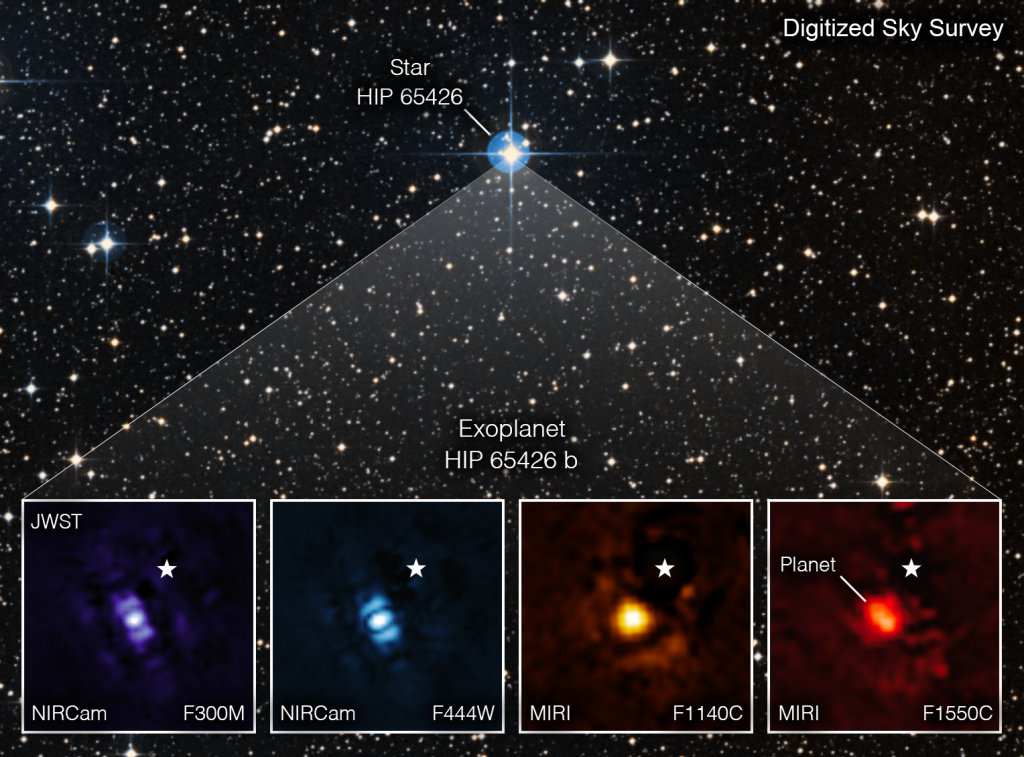
A planet is a large world orbiting a star. An exoplanet is simply a planet outside our Solar System. The two terms describe the same basic kind of object, but “exoplanet” tells us that the world belongs to another star system.
Planet vs exoplanet: the simple difference
The difference is mainly location. A planet in our own Solar System orbits the Sun. An exoplanet orbits a star beyond the Sun. Both can be rocky, gaseous, hot, cold, large or small.
Because exoplanets are far away and usually lost in the glare of their host stars, astronomers often study them through changes in starlight rather than seeing a detailed surface directly.
Our familiar planetary neighborhood
The eight recognized planets in our Solar System are Mercury, Venus, Earth, Mars, Jupiter, Saturn, Uranus and Neptune. The inner four are rocky worlds, while the outer planets are giants made mostly of gas and ices.

What makes an exoplanet different?
The word “exo” means outside. Exoplanets orbit stars beyond our Solar System and can be light-years away. They include worlds unlike anything close to home, including hot Jupiters, super-Earths and compact systems where several planets orbit close to their star.
How astronomers detect distant planets
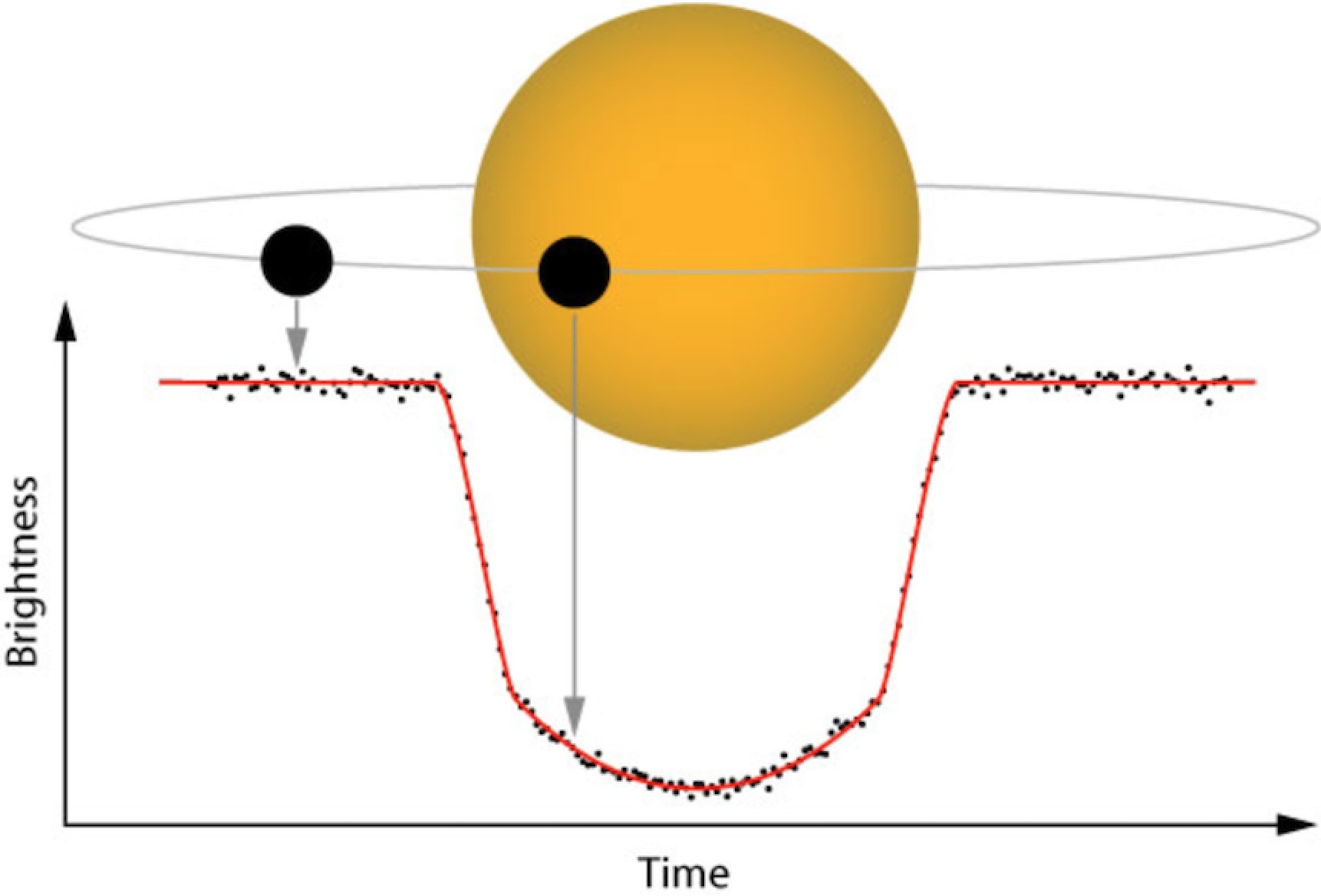
Transit method
When a planet passes in front of its star from our viewpoint, it blocks a tiny amount of starlight. Repeated dips can reveal the planet’s orbital period and approximate size.
Radial velocity
A planet’s gravity tugs on its star, causing the star to move slightly toward and away from us. Those motions shift the star’s spectrum and can help estimate the planet’s mass.
Direct imaging and other methods
Some large, young exoplanets can be imaged directly when advanced instruments suppress the overwhelming glare of the host star. Microlensing and precise position measurements offer additional ways to discover worlds.
Types of exoplanets
Exoplanets range from small rocky worlds to giant gas planets. Astronomers often group them into broad categories such as terrestrial planets, super-Earths, Neptune-like planets and gas giants. These labels describe size and general physical properties, not whether a planet is habitable.
Why exoplanets matter
Exoplanets show that planetary systems can form in many different arrangements. By measuring their sizes, masses, orbits and atmospheres, astronomers test theories of planet formation and learn whether our Solar System is typical or unusual.
Atmosphere studies can also reveal gases, clouds and temperatures, helping scientists understand the environments of distant worlds.
FAQ
Is Earth an exoplanet?
No. Earth orbits the Sun, so from our perspective it is a Solar System planet.
Can astronomers see exoplanets directly?
Sometimes, but direct imaging is difficult because stars are vastly brighter than their planets. Most exoplanets are discovered indirectly.
How are most exoplanets found?
Two major methods are transits, which measure dips in starlight, and radial velocity, which measures the gravitational wobble of a star.