
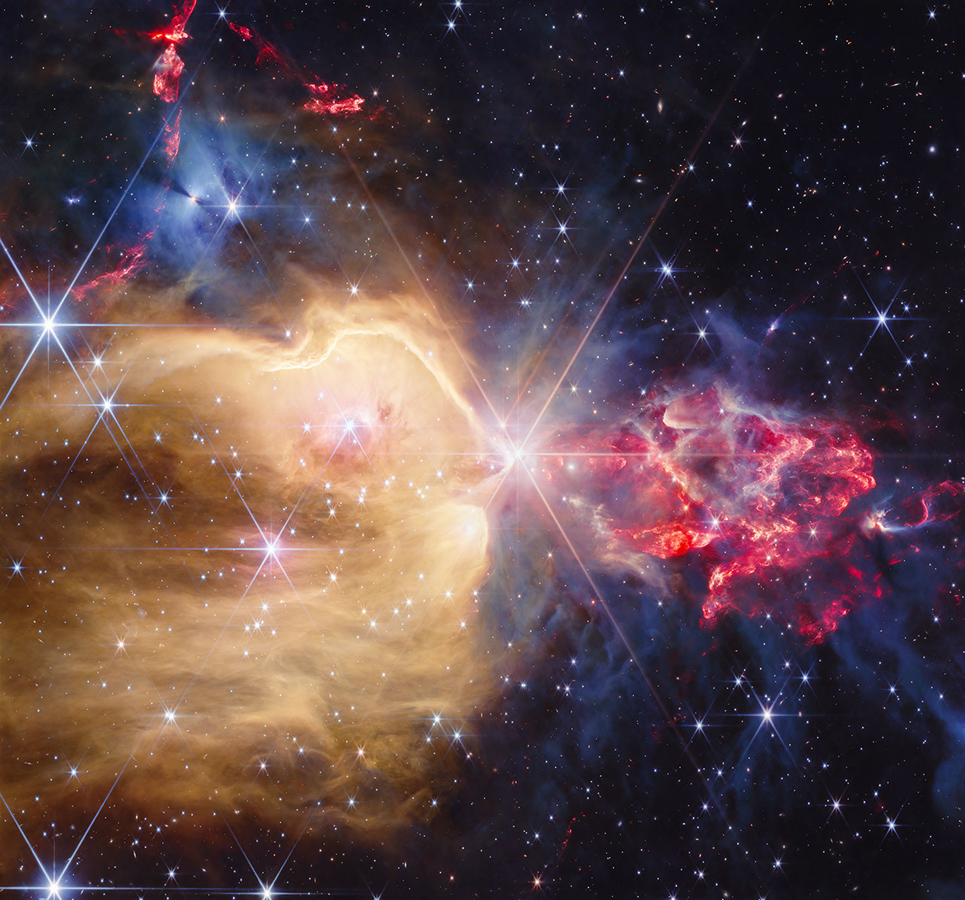
NASA’s James Webb Space Telescope has revealed previously hidden protostars, shocked molecular gas and powerful stellar jets inside NGC 7129, a star-forming region about 3,300 light-years away.
What Webb actually observed
Webb’s NIRCam view resolves a crowded nursery that visible-light telescopes struggle to see through because dust blocks much of the starlight.
The image separates hotter atomic hydrogen from cooler molecular hydrogen and reveals numerous embedded young stars at different evolutionary stages.
What the colors and gas reveal
The golden regions trace hotter atomic hydrogen, while red areas emphasize cooler molecular hydrogen shocked by young stellar outflows.
Gray structures mark some of the coldest, densest material where new protostars may still be forming.
How protostellar jets are made
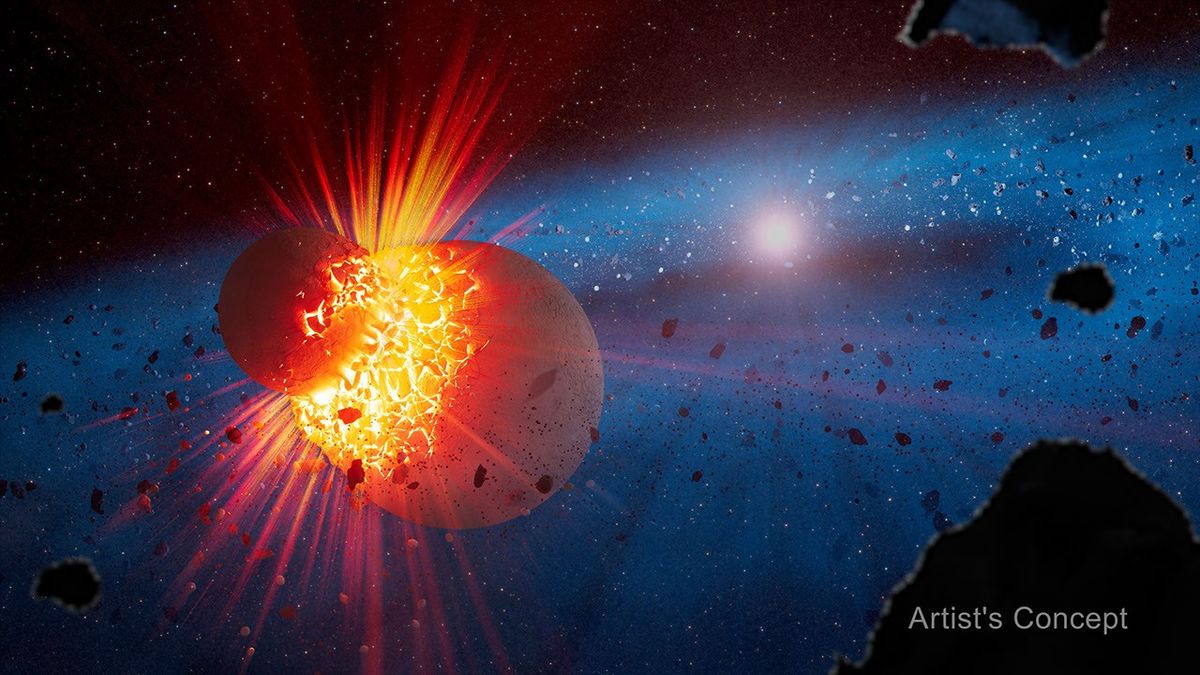
A young star grows by pulling material through a rotating disk. Magnetic fields can redirect a fraction of that material into narrow bipolar jets.
When those jets slam into surrounding gas they create shock fronts, knots and curved bow-shock structures that glow strongly in infrared wavelengths.
Different stages of star birth in one cloud
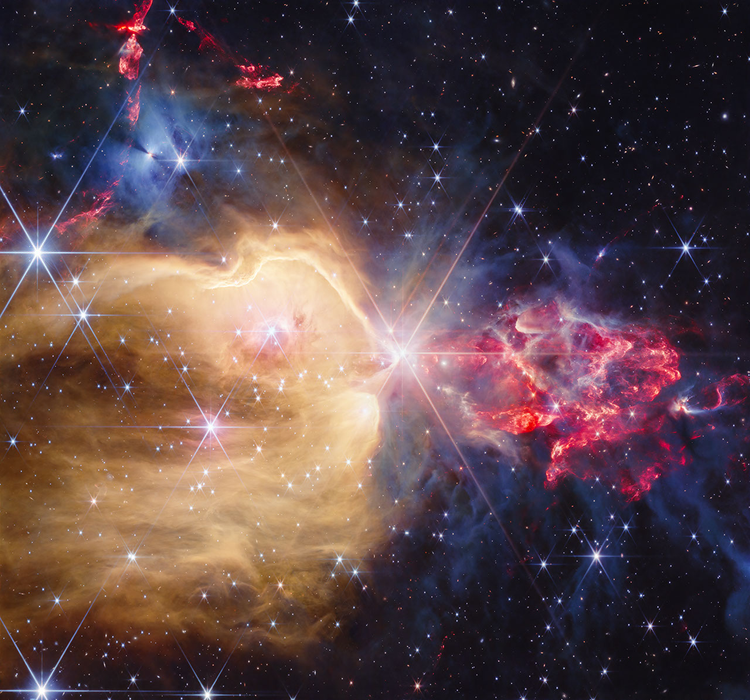
NGC 7129 is especially useful because it contains deeply embedded protostars alongside more mature young stars.
Comparing these populations helps astronomers reconstruct how radiation, winds and outflows change the cloud as a stellar cluster develops.
Why Webb improves on earlier infrared views
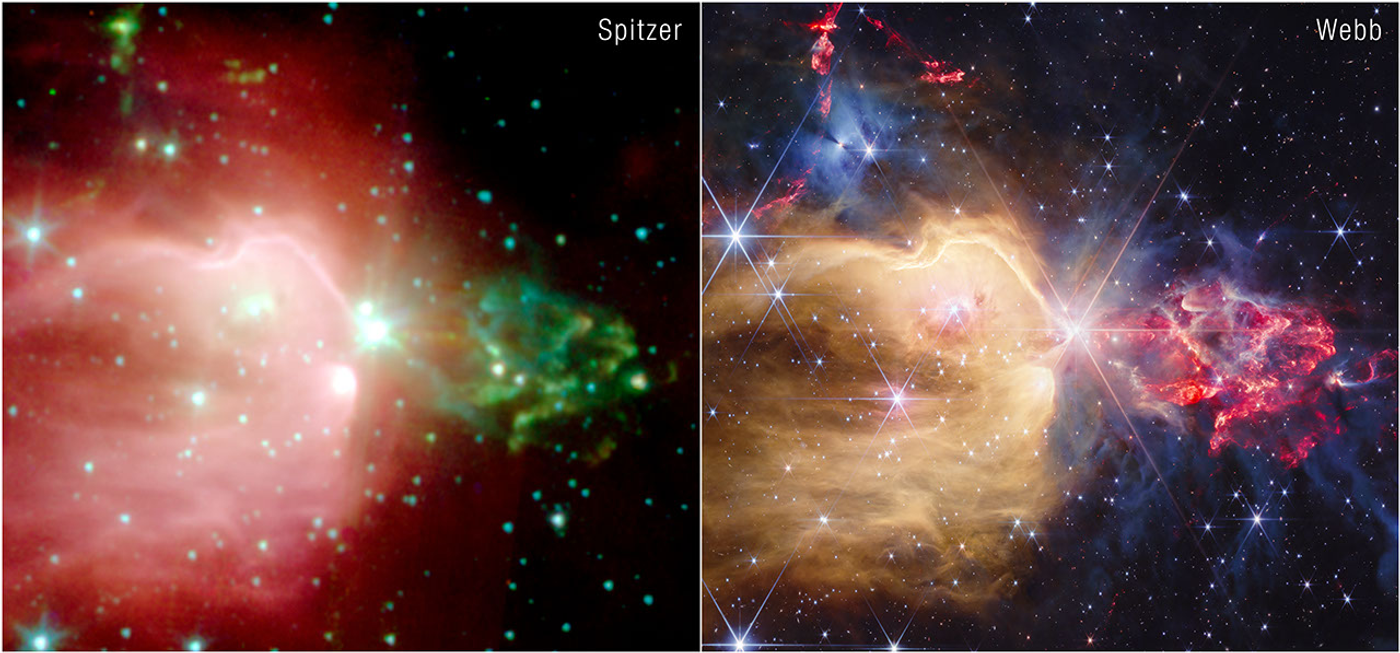
Spitzer revealed the broad infrared structure of NGC 7129, but Webb’s larger mirror and sharper infrared instruments resolve far finer filaments, jets and background galaxies.
This makes it easier to connect individual outflows with the young stars that produced them.
What astronomers can learn next
Researchers can use spectroscopy and follow-up imaging to measure gas temperatures, chemistry and motion across the cloud.
Those measurements help test models of how feedback from newborn stars can both disperse gas and compress nearby pockets enough to trigger more star formation.
Frequently asked questions
Is this a real astronomy result?
Yes. The article is based on the official mission or agency release linked below.
Are these images AI-generated?
No. The images referenced in this article are official NASA/ESA/JPL mission imagery or agency visual material.
Why is this useful for beginners?
The article explains the observation, the physics behind it, what scientists can conclude, and what still remains uncertain.