

Jupiter’s moon Io is covered with active volcanoes, lava lakes and giant plumes. Learn how tidal flexing powers this extreme geology and what Juno is revealing during close flybys.
Why Io stays hot despite being far from the Sun
Io is not heated mainly by sunlight. Its orbit around Jupiter is slightly eccentric, and the gravitational pulls of Europa and Ganymede help prevent that orbit from becoming perfectly circular. As Io moves closer to and farther from Jupiter, the enormous planet’s gravity flexes the moon.
That repeated squeezing generates heat inside Io. The process is called tidal heating. It is powerful enough to melt large amounts of rock and drive persistent volcanic activity across the surface.
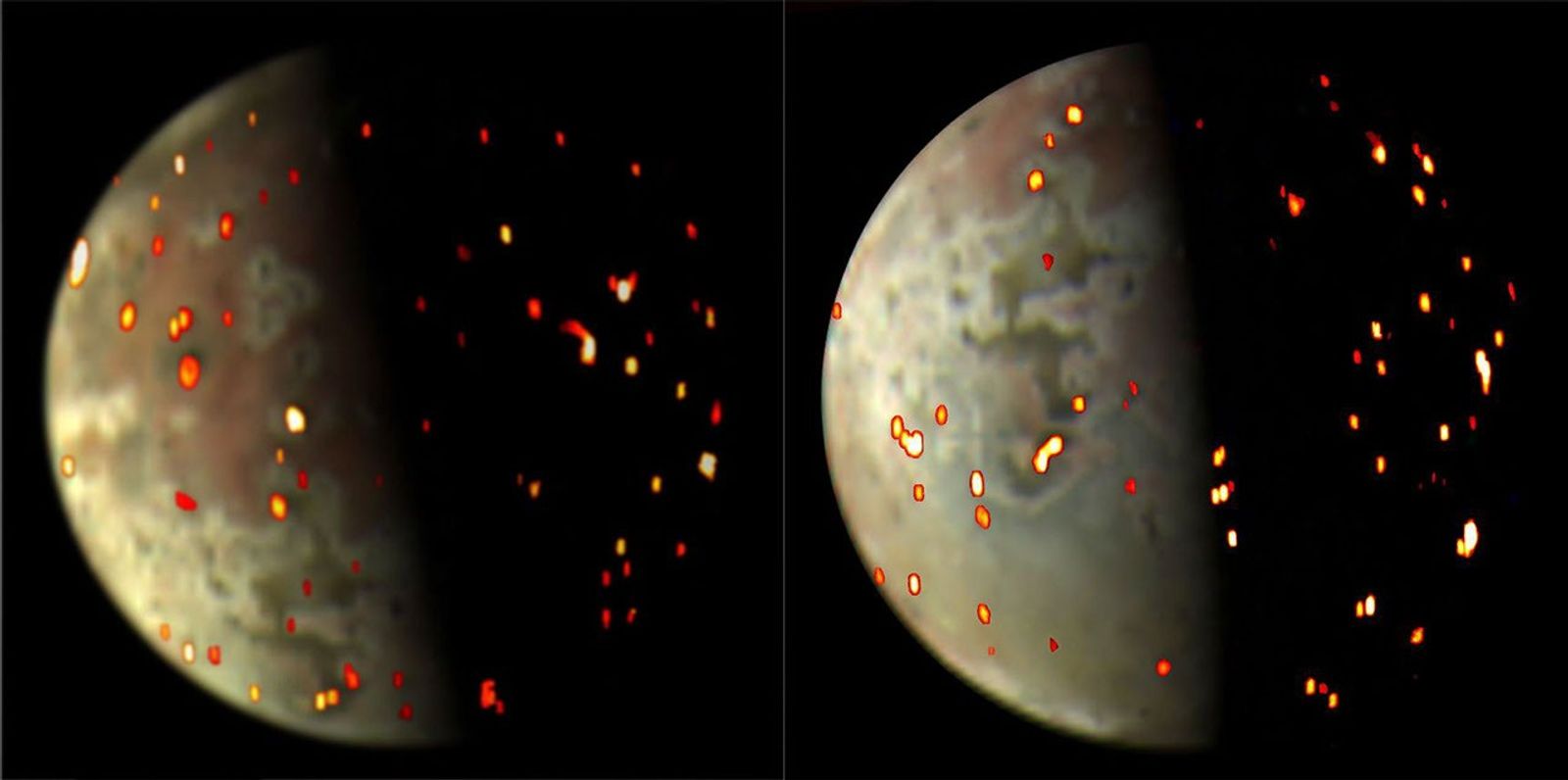
What Io’s volcanoes look like
Io has lava flows, volcanic depressions, hot spots and towering plumes. Some eruptions throw sulfur dioxide gas and fine material hundreds of kilometers above the surface. Deposits from those plumes paint broad rings of color around active centers.
The landscape changes on human timescales. Spacecraft have watched new lava appear, hot spots brighten and plume deposits spread across the terrain.
What Juno is learning during close encounters
NASA’s Juno spacecraft was designed primarily to study Jupiter, but its extended mission includes repeated observations of Io. JunoCam provides detailed visible-light images, while the JIRAM infrared instrument can identify heat from volcanic regions even on the night side.
Close flybys have revealed fresh views of mountains and volcanoes, helping researchers compare surface changes with older Voyager and Galileo observations.
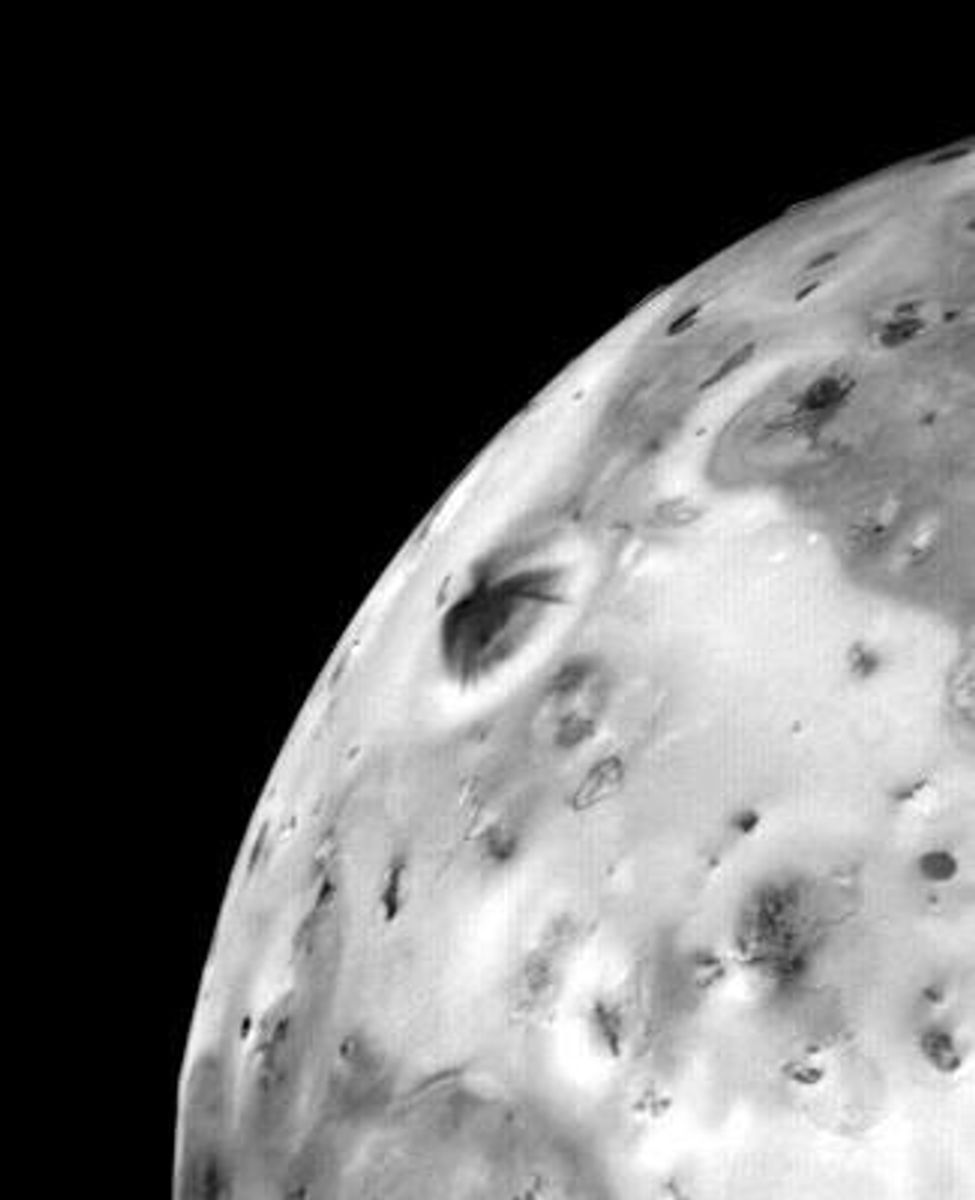
How Io affects Jupiter’s environment
Volcanic gases do not simply fall back to the surface. Some material is stripped away and becomes electrically charged, contributing to a torus of plasma around Jupiter. That material interacts with Jupiter’s powerful magnetic field and helps drive parts of the planet’s complex auroral system.
Io is therefore not just a geological curiosity. It is an active source of material within the entire Jovian system.
What Io teaches us about other worlds
Io shows that a small moon can remain intensely active without relying on sunlight or radioactive heating alone. Tidal heating is now a central idea in planetary science because it can also warm icy moons such as Europa and Enceladus.
Studying Io helps scientists understand how orbital relationships can power geology across very different kinds of worlds.
FAQ
Why is Io’s Volcanoes important?
It gives scientists a direct way to study how planets, moons or small bodies evolve and how conditions across the Solar System can differ dramatically.
Are these images real spacecraft or telescope observations?
Yes. The article uses real NASA spacecraft or telescope imagery and credits the mission or observing team in each caption.
Does this discovery prove life exists elsewhere?
No. Planetary discoveries can identify environments, chemistry and processes that are relevant to habitability, but evidence for life requires much stronger and more specific measurements.